Dow University Admission: Merit, Quotas and Documents
A definitive guide to securing an MBBS or BDS seat at Dow University of Health Sciences, covering the merit formula, Karachi quota rules, and documentation.
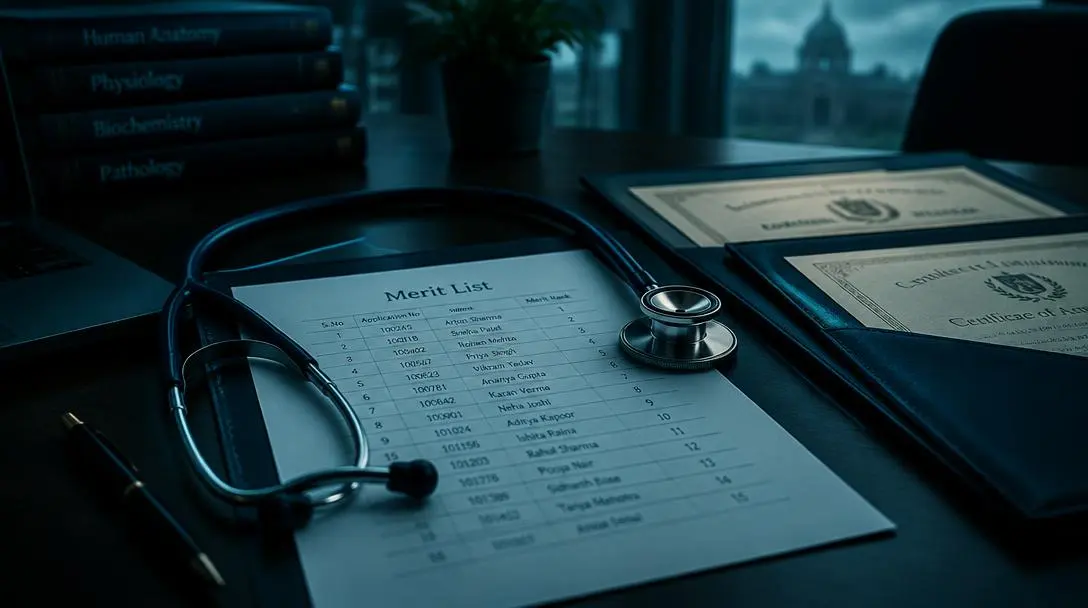
Understanding Dow University Admission for MBBS and BDS
Securing a seat at Dow University of Health Sciences (DUHS) is the primary goal for tens of thousands of pre-medical students across Karachi and the wider province of Sindh. When aspiring doctors talk about Dow University admission, they are usually aiming for one of two constituent medical colleges: Dow Medical College (DMC) located on Baba-e-Urdu Road, or Dow International Medical College (DIMC) at the Ojha Campus. While DMC caters predominantly to local Sindh-domiciled students on government-subsidised open merit and university development programmes, DIMC serves overseas candidates, dual nationals, and a growing cohort of local self-finance applicants.
The competition for an MBBS admission Karachi seat is famously intense. Every fraction of a percentage point in your aggregate score separates an open-merit seat from a high-fee self-finance seat, or complete exclusion from the public medical college system. DUHS operates under regulations set by the Pakistan Medical and Dental Council (PMDC), but its seat distribution is strictly governed by the Health Department of the Government of Sindh.
Navigating this admission cycle requires you to understand three interlocking variables: how your composite merit score is calculated, which specific Sindh MBBS quota or district allocation you fall under, and whether your documentation satisfies the uncompromising scrutiny committee. Missing a single verification stamp or misunderstanding your domicile status can invalidate an otherwise competitive MDCAT score.
The Merit Formula: How Dow Medical Merit is Calculated
The calculation of the Dow medical merit list follows the standard weighting mandated by the PMDC and implemented through the provincial admitting university (which is typically DUHS or JSMU depending on the annual rotation appointed by the Sindh Health Department). The composite aggregate is determined using a 50-40-10 distribution:
- 50% Weighting: Medical and Dental College Admission Test (MDCAT) score
- 40% Weighting: Higher Secondary School Certificate (HSSC) Pre-Medical or Cambridge A Level equivalence
- 10% Weighting: Secondary School Certificate (SSC) Matriculation or Cambridge O Level equivalence
To calculate your aggregate manually, convert each component to a percentage, multiply it by its respective weight, and sum the results. For example, if you scored 160 out of 200 in the MDCAT (80%), 950 out of 1100 in your Board of Intermediate Education Karachi (BIEK) exams (86.36%), and 980 out of 1100 in Matric (89.09%), your aggregate is calculated as:
- 1MDCAT: 80 × 0.50 = 40.000%
- 2HSSC: 86.363 × 0.40 = 34.545%
- 3SSC: 89.090 × 0.10 = 8.909%
Your final composite merit score would be 83.454%. In recent admission cycles, the closing merit for open-merit DMC MBBS seats for Karachi candidates has hovered between 88% and 92%, fluctuating based on the overall difficulty of the MDCAT and the severity of provincial intermediate grade inflation. You can explore how these requirements align with your long-term career aspirations in our /careers section.
Keep in mind that tie-breaking rules at DUHS are uncompromising. If two candidates have the exact same aggregate to three decimal places, preference is granted to the candidate with the higher MDCAT score. If the tie persists, marks in HSSC Biology, then HSSC Chemistry, and finally candidate age are used as sequential tie-breakers.
For students transitioning from Cambridge A Levels, an official Equivalence Certificate issued by the Inter Board Coordination Commission (IBCC) is mandatory. DUHS will not accept provisional school transcripts or Statement of Results. Your A Level grades (specifically Biology, Chemistry, and either Physics or Mathematics) and O Level grades must be converted by IBCC well before the online application portal closes.
Domicile Rules and the Sindh MBBS Quota System
A massive point of confusion for applicants is how the Sindh MBBS quota affects seat distribution at Dow. Unlike the centralized provincial open merit seen in Punjab, medical college admissions in Sindh are heavily compartmentalised by administrative division and district domicile. Dow Medical College is specifically designated as the admitting public college for students holding the permanent domicile of Karachi.
Karachi itself is divided into seven administrative districts: Central, East, South, West, Korangi, Malir, and Keamari. DUHS allocates open-merit MBBS seats across these districts based on population metrics approved by the provincial cabinet. You do not compete against the entirety of Sindh for open-merit seats at DMC; you compete directly against candidates within your specific Karachi district.
To be eligible for a district-specific seat at Dow Medical College, you must satisfy strict residency proofs:
- Candidate's Domicile and PRC (Form C): Must clearly state the specific Karachi district where you reside.
- Father's Domicile and PRC: In almost all circumstances, the candidate's domicile must match the father's domicile district. If the father is deceased, a death certificate alongside the mother's domicile is required.
- Institutional Study Requirements: The prospectus routinely specifies that the candidate must have passed both Matriculation and Intermediate examinations from institutions situated physically within the province of Sindh, preferably within Karachi.
Candidates attempting to use a dual domicile—holding a rural Sindh domicile alongside a Karachi residential record—face immediate disqualification and possible blacklisting under PMDC regulations. The Scrutiny Committee at DUHS verifies domicile authenticity directly with the concerned Deputy Commissioner (DC) offices. If your family recently shifted districts within Karachi, ensure your documents were legally transferred and updated before the admission advertisement is released.
Open Merit vs Self-Finance Seats at DUHS
Understanding the fee structures and seat categories is vital for financial planning. Dow University does not offer just one single tier of admission. Depending on your aggregate and financial capability, you might be admitted under standard Open Merit, the University Development Programme (UDP), or local self-finance at DIMC.
| Category | Institution | Eligibility / Domicile | Estimated Tuition (Year 1) | Aggregate Competitiveness |
|---|---|---|---|---|
| Open Merit (MBBS) | Dow Medical College (DMC) | Karachi districts only | PKR 50,000 – 90,000 | Highest (Typically 89% - 93%) |
| Open Merit (BDS) | Dr. Ishrat-ul-Ebad Khan Institute (DIKIOHS) | Karachi districts only | PKR 50,000 – 90,000 | Very High (Typically 86% - 89%) |
| UDP / Self-Finance | Dow Medical College (DMC) | Karachi & Sindh tagged | PKR 550,000 – 800,000 | High (Typically 84% - 88%) |
| Local Self-Finance | Dow International (DIMC) | Sindh & Open to Pakistan | PKR 1,600,000 – 2,200,000 | Moderate to High (Typically 78% - 84%) |
| Overseas / Foreign | DIMC (Ojha Campus) | Dual Nationals / Expats | USD 10,000 – 15,000 | Variable (Meets PMDC min. threshold) |
The University Development Programme (UDP) seats at DMC provide an essential safety net for students who narrowly miss the district open-merit cut-off by 0.5% to 2%. You sit in the exact same lecture halls and clinical rotations as open-merit students, earn the identical degree from DUHS, but pay a substantially higher, unsubsidised annual tuition fee. If financing an unsubsidised medical degree is a concern, consider researching alternative career pathways through our collection of /resources and looking into external funding options via /scholarships.
Essential Document Checklist for Dow University Admission
When DUHS opens its application window, typically in the weeks following the official announcement of national MDCAT results, you must submit a completed dossier. Incomplete files are rejected without room for appeal. Prepare original documents alongside at least four sets of attested photocopies well in advance.
- Matriculation / SSC Documents: Original Certificate (Sanad) and detailed marks certificate showing science group subjects.
- Intermediate / HSSC Documents: Detailed Marks Sheet (Marks Certificate) of Pre-Medical (Part-I and Part-II) and Provisional Certificate from your college or board.
- IBCC Equivalence Certificates: Mandatory for Cambridge O/A Level or American high school applicants. Both SSC and HSSC equivalence documents are required.
- MDCAT Official Result Card: Downloadable printout from the official PMDC portal showing your total score and national percentile.
- Identity Proof: Candidate’s Computerised National Identity Card (CNIC) or Smart B-Form issued by NADRA. Standard non-smart paper B-forms are rejected.
- Parental Identity: Copy of Father’s (or Guardian’s) valid CNIC.
- Residency Documents: Candidate’s Permanent Residence Certificate (PRC on Form C) and Domicile Certificate from Karachi. Father’s Domicile and PRC.
- Photographs: At least eight passport-sized photographs with a light blue or white background, properly attested on the reverse.
- Affidavit of Non-Political Affiliation: Stamped on legal stamp paper (typically PKR 100 denomination) as per the exact specimen provided in the official DUHS prospectus.
Attestations must be carried out by a verified government officer of BPS-17 or above. Ensure the officer's name, designation, and official stamp are sharp and legible on every single sheet submitted.
Step-by-Step Application Timeline and Traps to Avoid
The application window for Dow University admission generally opens between late November and January, concluding just before the start of the academic year in February or March. Do not wait for the final week to begin gathering paperwork; administrative backlogs at the Board offices and the Deputy Commissioner's office in Karachi can derail your submission.
- 1Monitor the Official DUHS Portal: Admission forms are hosted exclusively on the official Dow portal (duhs.edu.pk). Never rely on third-party social media pages for deadlines.
- 2Online Registration: Fill in your academic marks meticulously. Discrepancies between the marks keyed into the portal and your physical marksheets will result in cancellation of your candidacy during scrutiny.
- 3Challan Generation and Payment: Download the custom bank voucher and pay the non-refundable processing fee at designated branches of designated commercial banks (usually United Bank Limited or Sindh Bank).
- 4Physical Dossier Submission: DUHS usually requires candidates to dispatch their printed form, paid bank voucher, and attested documents via a registered courier partner (such as TCS) or deposit them directly at designated campus collection desks.
- 5Scrutiny and Provisional Merit Lists: Dow releases a provisional merit list highlighting any document deficiencies. You are granted a narrow window (usually 48 to 72 hours) to submit objections or supply missing proofs.
- 6Interviews and Original Document Verification: Shortlisted candidates must appear in person at the Ojha or DMC campus with original documents. Failure to appear on your specified date results in forfeiture of your seat to the next candidate on the waiting list.
Avoid the common trap of delaying IBCC equivalence or Domicile corrections. If your father's CNIC has expired, NADRA renewal delays can halt your application process at the verification counter.
Backup Options if You Miss the Dow Cut-Off
Because DMC admits only a few hundred candidates across its open-merit Karachi allocations, thousands of capable students fall just short of the competitive aggregate. If your merit calculation indicates you are outside the historical bracket, formulate your backup strategy immediately rather than waiting for the final merit lists.
Within the public sector, Jinnah Sindh Medical University (JSMU) and Karachi Medical and Dental College (KMDC) are viable institutional pathways with identical clinical training foundations. In the private sector, institutions like Ziauddin University, Liaquat National Hospital and Medical College, and Aga Khan University run separate admission processes with different testing and weighting parameters.
Furthermore, DUHS offers excellent non-MBBS degree pathways including the Doctor of Pharmacy (Pharm-D), Doctor of Physical Therapy (DPT), and BS in Medical Technology across clinical laboratories, radiology, and surgical sciences. These four- and five-year professional healthcare degrees share faculty and clinical facilities with DMC. You can evaluate the curriculum, career outcomes, and prerequisites for these professional tracks in our /courses directory or take our specialized career alignment /quiz to determine if allied healthcare fields align with your strengths.
Questions students ask about this topic
Keep reading
- AdmissionsNUST vs NED vs GIKI: Choosing an Engineering University in PakistanA realistic, Karachi-focused guide to choosing between NUST, NED, and GIKI, covering entry test math, total expenses, hostel survival, and job placements.
- AdmissionsFAST NUCES Admission Test: What the Paper Actually AsksA comprehensive, realistic guide to surviving the FAST NUCES admission test, covering advanced maths requirements, negative marking, and campus-specific merit realities.
- AdmissionsIBA Karachi Aptitude Test: A Realistic Preparation PlanA realistic, Karachi-focused guide to clearing the IBA Karachi aptitude test, covering section breakdowns, prep schedules, cut-offs, and financial aid.