How to Choose a Tuition Academy Without Wasting a Year
A practical guide for Karachi students on choosing the right coaching centre, comparing fees, avoiding common traps, and knowing when to study alone.
The Real Dilemma: How to Choose Tuition Academy Wisely
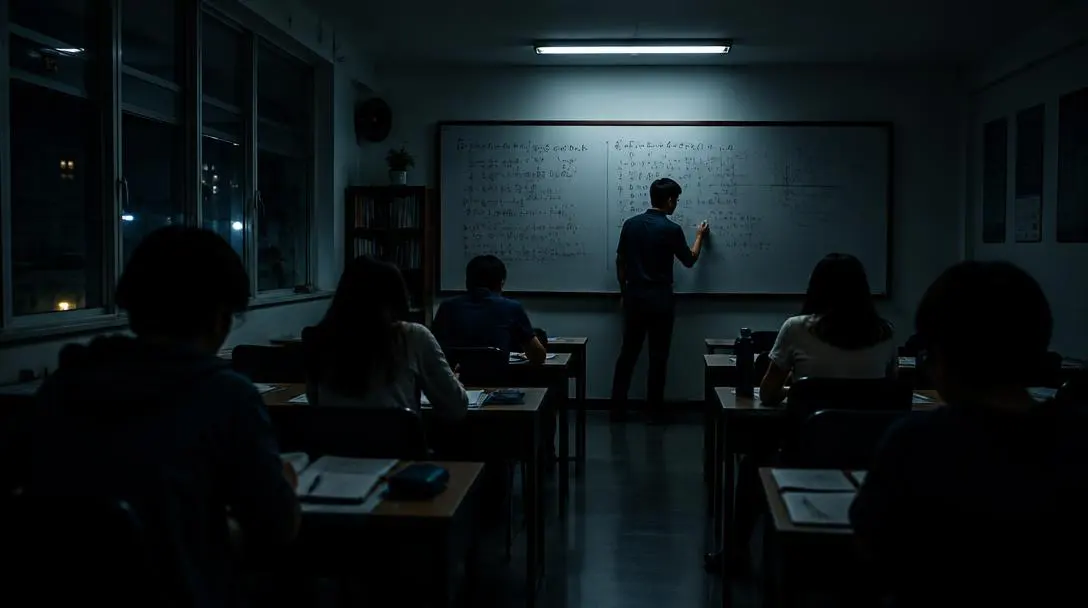
Between 4:00 PM and 9:00 PM in Karachi, commercial strips across Gulshan-e-Iqbal, North Nazimabad, and PECHS fill with students navigating bumper-to-bumper traffic. Most carry heavy bags containing two sets of books: college texts and academy registers. For thousands of matric, intermediate, and A Level students, enrolling in an evening coaching centre is treated as an automatic reflex rather than a deliberate decision. Parents pay substantial sums, students sacrifice their evenings, and yet the results on mark sheets frequently fall short of expectations.
Understanding how to choose tuition academy options that genuinely serve your academic goals requires stripping away the marketing hype. A coaching centre cannot sit the board paper for you. If an institution drains your physical stamina, consumes your self-study hours, and offers only crowded classrooms with generic lectures, it ceases to be an academic aid. It becomes a liability. Making the correct choice early in the academic session ensures you do not spend second term trying to recover months of lost preparation time.
The Cost Reality: Deciphering Academy Fee in Karachi
Tuition expenses in urban Pakistan have risen steadily, making coaching a significant monthly budget line for households. When evaluating an academy fee in Karachi, you must assess both headline tuition and the hidden ancillary costs that institutions rarely advertise on their prospectuses.
Fees vary significantly depending on the system of education, location, and the reputation of the faculty:
- Matric and Intermediate (BIEK / BSEK): Standard group packages generally range from PKR 3,000 to PKR 8,000 per month for comprehensive subjects. Individual subjects taught by senior subject specialists can run between PKR 2,500 and PKR 4,500 each.
- Federal Board (FBISE): Due to a smaller pool of specialised instructors in Karachi, fees are often marginally higher, typically PKR 4,000 to PKR 9,000 per month for science groups.
- Cambridge Assessment International Education (CAIE O and A Levels): Individual subject fees in established setups often range from PKR 7,000 to PKR 16,000 per subject per month. Enrolling in three A Level subjects can cost PKR 25,000 to PKR 45,000 monthly, excluding registration charges.
- Ancillary Costs: Always ask about non-refundable admission fees (often PKR 2,000 to PKR 5,000), test session charges, and printed booklet fees. These figures fluctuate each session, so verify the final written fee schedule before making any initial deposit.
Beyond tuition, factor in commute expenses. Spending an hour each way on a rickshaw, van, or motorbike through Karachi traffic not only costs PKR 4,000 to PKR 8,000 in fuel or transit fares every month but also depletes the mental energy you need for personal revision.
Tuition vs Self Study: Are You Outsourcing Your Discipline?
Before signing up for any evening classes, pause and diagnose why you feel you need them. The ongoing debate between tuition vs self study comes down to personal learning habits, syllabus structure, and how you manage time.
Coaching academies provide external structure: a set timetable, regular testing, and summaries of dense syllabus sections. However, they can also cultivate a dangerous illusion of competence. Sitting passively through a two-hour chemistry lecture feels productive, but passive listening is not the same as active recall. If an academy leaves you with less than two uninterrupted hours of daily home study, your retention will collapse by examination time.
| Consideration | Tuition Academy | Pure Self-Study |
|---|---|---|
| Concept Delivery | Structured lectures tailored to typical board patterns. | Self-paced via textbooks, video lectures, and syllabus guidelines. |
| Time Investment | 3 to 5 hours daily (classes plus transit). | Zero commute; study hours are entirely under your control. |
| Feedback Loop | Regular tests, marked against standard board formats. | Requires self-marking using past paper schemes or peer review. |
| Financial Cost | High; recurring monthly tuition and transport fees. | Minimal; limited to textbooks, stationery, and past paper pastings. |
| Burnout Risk | High for students balancing full college and academy shifts. | Lower physical fatigue, but requires intense personal discipline. |
| Ideal For | Students who struggle to start studying without external deadlines. | Disciplined learners seeking top-percentile ranks or conceptual mastery. |
Remember: Every hour spent listening to an instructor explain a concept must be matched by at least forty-five minutes of solving questions independently. If tuition leaves zero space for independent practice, self-study will consistently yield better results.
Seven Questions You Must Ask Before Paying the Admission Fee
Never hand over an admission fee based purely on a glossy leaflet or an acquaintance's recommendation. Arrange a visit during active class hours, step into the administrative office, and ask clear, direct questions.
- 1Who will teach my specific section? Many large academies place renowned 'star' instructors on marketing banners, but assign junior teachers or fresh graduates to regular weekday evening batches. Demand the names of the specific teachers assigned to your prospective time slot.
- 2What is the maximum student capacity per class? A hall containing ninety students makes individual doubt resolution impossible. An effective learning batch should ideally not exceed thirty to thirty-five students.
- 3What is the testing frequency and grading turnaround? Lectures without rigorous testing are useless. Ask how often formal tests take place, whether tests are checked against past board rubrics, and how quickly papers are returned to students.
- 4Can I attend two consecutive trial classes? Reputable institutions have no reason to hide their classroom environment. If an academy insists on full advance fees before allowing you to sit through a single session, treat that as a warning.
- 5When does syllabus coverage conclude? For BIEK intermediate exams held in May, syllabus completion must happen by late February to allow adequate time for grand test series. If an academy finishes content two weeks before board papers, revision becomes chaotic.
- 6What is the refund and withdrawal policy? Circumstances change. If a teacher leaves mid-session or the commute proves unsustainable, will the academy refund the unused portion of advance payments? Insist on seeing this in writing.
- 7How do you handle board-specific paper presentation? Sindh Board requires specific heading conventions and answer lengths; Federal Board stresses student learning outcomes (SLOs); Cambridge mandates strict mark scheme compliance. Confirm that your teachers understand these exact board differences.
Major Red Flags to Watch Out For in Karachi Coaching Centres
Certain operational practices immediately indicate that a coaching centre prioritises commercial revenue over academic outcomes. Keep an eye out for these patterns during your search:
- The Ghost Faculty Phenomenon: The academy advertises a famous physics lecturer, but within three weeks of classes starting, that instructor hands the batch over to an unannounced substitute and only reappears for the final 'grand revision' lecture.
- Guaranteeing Exact Board Percentages: Any administrator claiming they can guarantee an A-1 grade (80%+) or exact board position is engaging in predatory marketing. Success depends entirely on your grasp of concepts and examination performance.
- Outdated, Monopolised Notes: Beware of centres that discourage using standard reference books (such as Sindh Textbook Board volumes or international author editions) and insist that memorising their own 50-page summary packet is sufficient.
- Lack of Regular Attendance Notifications: If you can skip class three days in a row without a message or call reaching your parents, the administration lacks operational discipline.
- Overcrowded Classrooms With Poor Acoustics: If students seated in the sixth row cannot hear the teacher clearly or read board notes without straining, learning efficiency drops immediately.
The Entry Test Academy Trap: MDCAT, ECAT, and Aptitude Prep
The pressure around choosing an entry test academy in Karachi is intense. Every summer, after intermediate examinations, thousands of students register for crash courses targeting institutions like Dow University of Health Sciences (DUHS), JSMU, NED University, FAST, IBA, and AKU.
These crash programmes run for eight to twelve weeks, compressing two years of pre-medical or pre-engineering material into daily high-speed lectures. The common trap is treating an entry test academy like a regular board tuition centre.
Board tuition rewards detailed descriptions, memorised definitions, and neat diagrams. Entry tests, however, evaluate speed, conceptual depth, unit conversions, and strategic elimination of multiple-choice options under severe time constraints. A standard board coaching centre running an 'entry test wing' often fails because its instructors still teach with a descriptive mindset.
When selecting an aptitude preparation provider, verify that their test engine includes negative-marking simulations, computer-based testing interfaces (essential for NED, FAST, and NUST candidates), and granular performance analytics. Review our guides on courses and resources to cross-check what university entrance exams truly demand before paying for high-cost aptitude packages.
Essential Checklist: How to Choose Tuition Academy for Your Exam Board
Because different examination boards assess candidates through distinct criteria, your academy choice must directly align with your specific board requirements.
### Sindh Board (BIEK and BSEK)
For Karachi board students, content mastery alone does not ensure an A-1 grade. Instructors must understand the technical nuances of BIEK marking: proper heading structures, comprehensive derivation steps, and standard diagram formats. Choose an academy that conducts rigorous subjective tests marked by faculty who have real familiarity with board evaluation standards.
### Federal Board (FBISE)
FBISE has shifted away from predictable rote questions toward SLO-based assessments. If you study under the Federal Board, avoid centres that rely on old question banks. You need teachers who present unseen conceptual problems and focus heavily on analytical thinking rather than prefabricated model answers.
### Cambridge International (O and A Levels)
A Level success requires mastery of specific mark schemes, command words (such as 'evaluate', 'explain', and 'state'), and component thresholds. Seek subject-specialist teachers who run focused independent studios rather than broad commercial coaching factories. Verify that the centre incorporates paper variant analysis and structured past paper drilling spanning at least the past eight exam series.
What to Do When an Academy Stops Working Mid-Session
Students frequently recognise by November or December that their evening coaching is not producing results. Yet, many persist simply because they have paid fees or feel anxious about abandoning the routine.
Staying in an unproductive academy out of habit is a mistake. If your grades on weekly assessments are flat, the classroom atmosphere is chaotic, and you are chronically sleep-deprived, make a decisive change:
- 1Assess the weak links: Identify whether your struggle is with every subject or just one problematic discipline (like Physics or Mathematics).
- 2Switch to single-subject instruction: Drop the broad academy package and retain only the specific subject specialist you genuinely need.
- 3Transition to disciplined self-study: Reclaim the evening hours. Use standard board textbooks, syllabus outlines, and past paper compilations. If you struggle with planning, use our academic guides on blog to structure a realistic revision timetable.
Your intermediate or Cambridge years pass rapidly. Choosing the right educational support is not about following your classmates to the busiest street corner in town; it is about protecting your time, keeping costs sustainable, and focusing on the focused independent study that actually secures your board score and university admission.
Questions students ask about this topic
Keep reading
- ParentsA Parent's Guide to Supporting a Teenager's Career ChoiceHelp your teenager choose the right career path in Pakistan without damaging your relationship or their mental well-being.
- ParentsSwitching Schools or Boards Mid-Way: What ChangesSwitching boards mid-stream can save your grades or derail your academic year. Here is the unvarnished guide to syllabus shocks, paperwork, and timing.
- Exam PrepMDCAT Preparation Timeline: Class 11 to Test DayA realistic MDCAT preparation timeline for Pakistani students, stage by stage from the first week of Class 11 to the final fortnight before the test.