Study Abroad Scholarships Pakistani Students Actually Win
A realistic guide to undergraduate study abroad scholarships that Pakistani students actually win, covering real costs, timelines, and document requirements.
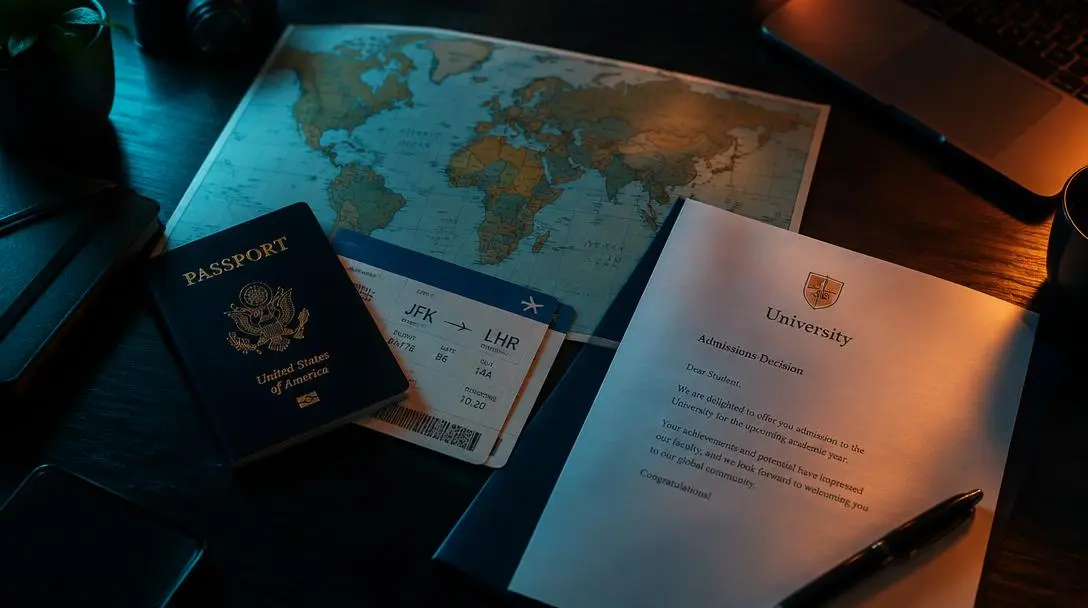
Every admissions season across Karachi, coaching centres and social media pages fill with stories of students bagging full rides to prestigious overseas colleges. What these posts rarely mention is that an overwhelming number of these awards go to Master's candidates or elite international school applicants with private admissions counsellors. If you are sitting in an intermediate college in North Nazimabad, completing your FSc through the Federal Board, or working through your A Levels, finding genuine study abroad scholarships for Pakistani students at the undergraduate level can feel like chasing a mirage.
The opportunity exists, but you have to look beyond American private universities with acceptance rates under two percent. Several bilateral government agreements and international cultural exchange schemes specifically recruit Pakistani high school leavers. These are fully funded scholarships that cover tuition, accommodation, and basic living allowances, provided you meet strict academic criteria and survive a rigorous paperwork cycle.
To win one, you need clear facts: which schemes accept bachelor's candidates, what you will spend out of pocket in Pakistani rupees before boarding an aircraft, and what sacrifices come with living on a state-sponsored student stipend abroad.
The Undergrad Reality: Chevening Pakistan vs Bachelor's Schemes
One common source of confusion among college students is the barrage of marketing around prestigious schemes like Chevening Pakistan. You must understand straight away that Chevening, Commonwealth general scholarships, and Australia Awards do not fund undergraduate degrees. They are targeted strictly at mid-career professionals or postgraduate scholars who already hold a four-year bachelor's degree.
If you have just finished your second-year examinations or your A2 papers, applying to these postgraduate funds is impossible. Instead, your focus must stay on state-to-state bilateral programmes. Governments in Europe and Asia run these initiatives to build geopolitical and diplomatic ties with Pakistan, which means our quota is real and renewed annually.
Never pay an agent who promises an undergraduate seat on Chevening or Commonwealth schemes. Those programmes do not entertain bachelor's applicants under any circumstances.
If you want to view the full directory of legitimate funding routes open to Pakistani leavers, consult our vetted guide on scholarships before paying application fees anywhere.
Major Study Abroad Scholarships for Pakistani Students at Undergraduate Level
A handful of bilateral undergraduate programmes accept Pakistani school-leavers every year without requiring personal wealth. Four programmes stand out for their predictable selection patterns and verified track records.
### 1. Turkiye Burslari (Turkish Government Scholarship)
Turkiye Burslari is arguably the most popular government-funded award among Pakistani intermediate and A Level students. It provides a full tuition waiver, one year of Turkish language preparation, on-campus dormitory accommodation, state health insurance, and a monthly stipend (routinely set between Rs 45,000 and Rs 60,000 depending on currency parity).
The scheme does not demand an IELTS score if your selected programme is taught in Turkish, though English-taught technical programmes usually require an official test score. The major trade-off is language immersion: even if you study Engineering or Computer Science in English, living in cities like Ankara, Konya, or Istanbul requires rapid Turkish language acquisition. You can assess whether technical programmes abroad match your long-term goals on our careers page.
### 2. MEXT Japanese Government Undergraduate Scholarship
Run directly through the Embassy of Japan in Islamabad and the Consulate-General in Karachi, the Japanese Ministry of Education, Culture, Sports, Science and Technology (MEXT) scholarship is among the most academically rigorous awards in the world. Pakistani students sit written examinations in Mathematics, English, Chemistry, and Physics right here in Karachi or Islamabad.
MEXT covers round-trip airfare, full tuition, five years of study (including a mandatory preparatory year of Japanese language training), and a monthly living allowance fluctuating between Rs 230,000 and Rs 270,000 in Pakistani rupee terms. The downside is brutal competition: only a very small number of undergraduate applicants from the entire country clear the academic tests and embassy interviews each cycle.
### 3. Stipendium Hungaricum (Hungary)
Managed locally by the Higher Education Commission (HEC) of Pakistan alongside the Hungarian Tempus Public Foundation, this scheme places Pakistani students into Hungarian public universities. HEC conducts an initial screening test (frequently via the Education Testing Council, or ETC), after which nominated candidates interview directly with university faculties.
Stipendium Hungaricum covers tuition, provides basic dorm housing or a modest housing contribution, offers basic medical insurance, and issues a monthly stipend of approximately Rs 35,000 to Rs 45,000. This stipend is quite tight for European living costs, meaning students must manage budgets meticulously or work permitted student hours in Budapest or Debrecen to cover personal expenses.
### 4. Chinese Government Scholarship (CSC / Silk Road)
Administered through bilateral channels between the Chinese Embassy, HEC, and individual Chinese universities, CSC awards support thousands of international students. Undergraduate seats for Pakistani science and engineering candidates are common. The scholarship covers full tuition, campus housing, and a baseline monthly allowance.
Candidates should be prepared to complete their degree in Chinese (Mandarin) following an intensive preparatory foundation year, unless they secure a spot in one of the limited English-medium engineering tracks.
Comparing Legitimate Undergraduate Awards for Pakistani Candidates
| Scholarship Programme | Administering Body | Language Requirement | Monthly Living Allowance (PKR Approx.) | Coverage Details |
|---|---|---|---|---|
| Turkiye Burslari | Turkish Government | Optional for Turkish tracks; English tests for English tracks | Rs 45,000 – Rs 60,000 | Tuition, Dorm, Health Cover, Return Ticket |
| MEXT Japan | Japanese Embassy / MEXT | Written Exam (Maths, English, Science) | Rs 230,000 – Rs 270,000 | Tuition, Prep Year, Dorm Allowance, Flights |
| Stipendium Hungaricum | HEC Pakistan & Tempus Foundation | HAT / ETC Test + English Proficiency Certificate | Rs 35,000 – Rs 45,000 | Tuition, Subsidised Dorm, Health Cover |
| Chinese Government (CSC) | CSC / Chinese Universities / HEC | English proficiency or HSK prep year | Rs 50,000 – Rs 70,000 | Tuition, Campus Dormitory, Basic Insurance |
The Hidden Out-of-Pocket Expenses Before You Leave Pakistan
One dangerous myth shared among students in Karachi is that applying for fully funded scholarships is free. While the scholarship itself pays your future university costs, the pre-departure process requires substantial capital in Pakistani rupees. Families are often blindsided by these compulsory upfront charges.
- Passport Fees: An urgent 36-page or 72-page machine-readable passport runs between Rs 5,500 and Rs 14,000 through the Directorate General of Immigration and Passports.
- Board Attestation: Submitting Matric and Inter marksheets to your local intermediate board (such as BIEK in Karachi) and the Inter Board Coordination Commission (IBCC) costs between Rs 8,000 and Rs 16,000 depending on the number of original documents and urgent processing fees.
- MOFA Attestation: Following IBCC verification, the Ministry of Foreign Affairs charges official courier and stamp fees to validate documents for diplomatic use.
- Standardised Tests: If your university choice requires IELTS Academic, booking an exam with the British Council or AEO Pakistan will cost roughly Rs 65,000 to Rs 75,000. If taking the SAT, budget between Rs 32,000 and Rs 40,000 depending on bank exchange surcharges.
- Medical Screening and Immunisation: Embassy-approved medical clinics charge anywhere from Rs 15,000 to Rs 35,000 for standard tuberculosis chest X-rays, hepatitis panels, and blood screens.
- Visa Application Fees and Translations: Consular handling fees, document translation into Turkish or Hungarian, and police character certificate verifications at your local Karachi SSP office will easily consume an additional Rs 30,000 to Rs 60,000.
In total, you must realistically secure between Rs 150,000 and Rs 250,000 in disposable household funds just to survive the application, testing, and visa cycle. If your family cannot pull this together, explore our funded local pathways on our courses directory first.
Document Preparation and Attestation Pathways in Sindh
Paperwork delays derail more scholarship applications in Pakistan than academic rejection letters. Government bodies operate on strict calendars and will discard your application if your documents lack official stamps.
If you studied under the Sindh Board (BIEK or BSEK), your first step after receiving your official HSC Part-II marksheet is to visit the Board office to apply for marksheet verification sealed for IBCC. This verification packet is then delivered to the IBCC office (located near the Federal Urdu University campus in Gulshan-e-Iqbal, Karachi) for final QR-coded attestation stickers.
If you sat your Cambridge O and A Levels, you do not visit BIEK. Instead, you submit your original Statement of Results and Cambridge Certificates directly to IBCC for an Equivalence Certificate. You must account for the reality that the IBCC conversion formula slightly reduces your raw percentage compared to local marks, which makes maintaining straight A grades essential.
Once IBCC has stamped your certificates, submit them to the Ministry of Foreign Affairs (MOFA) camp office on Shahrah-e-Faisal. Never laminate your documents; laminated certificates are routinely rejected by consular verification teams.
Academic Benchmarks and Tests for Study Abroad Scholarships for Pakistani Students
To be competitive for foreign state scholarships, local academic percentiles matter. For students holding an FSc Pre-Engineering, Pre-Medical, or General Science background, a verified score above 80 percent in your intermediate examinations is the functional baseline. For competitive technical faculties under Turkiye Burslari or Stipendium Hungaricum, applicants routinely boast 85 percent or higher.
A Level candidates generally need minimum grades of A-A-B in primary academic subjects. General Paper and Urdu as a second language carry very little weight with foreign selection committees evaluating technical and scientific degrees.
Do not assume that an English-medium schooling certificate excuses you from preparation. While some Turkish and Chinese universities accept an English Proficiency Certificate issued by your college principal, high-ranking departments demand international benchmarks.
Relying on an English proficiency letter from a local Karachi college is risky. Whenever possible, clear a recognised exam to keep your options open.
You can test your basic exam and university readiness by taking our quick academic quiz to determine where your strengths lie before booking expensive test dates.
Application Timelines: When to Start in Class 11 and Class 12
Starting your scholarship search after receiving your intermediate Part-II results is the single biggest tactical error you can make. The admissions cycle works roughly nine to twelve months ahead of the actual start term.
- 1Class 11 (First Year / AS Level): Focus entirely on your marks. Obtain your Computerised National Identity Card (CNIC) or Smart B-Form from NADRA without spelling errors in your name or parents' names. Discrepancies between your NADRA record and Matric certificate take months to rectify.
- 2Summer Break (Between Part-I and Part-II): Begin drafting your Statement of Purpose (SOP). Research faculty requirements, review foreign bilateral portals, and collect extracurricular proof.
- 3September to November (Class 12 / A2 Level): HEC opens registrations for various bilateral exchange tests. Gather your verified Part-I marksheet and prepare an official 'Hope Certificate' signed by your college principal indicating your anticipated Part-II scores.
- 4December to February: The critical window. Turkiye Burslari applications run typically from early January to late February. Hungarian Stipendium programmes close their portals in mid-January. Complete all online submissions before deadline week, as server congestion is notorious on the final days.
- 5March to May: MEXT applications generally release their calls via the embassy website. Japanese screening tests take place during late spring or early summer.
- 6June to August: Embassy interviews, final document submissions, visa processing, and pre-departure medical clearances occur during these months before classes commence in September or October.
For structured document templates, SOP formats, and verification guides, browse through our academic resources section to prepare early.
Strategic Trade-offs: Life on an Overseas Government Stipend
Living abroad on a government scholarship is an exercise in resource management, not a holiday. The living stipends provided by schemes like Turkiye Burslari or Stipendium Hungaricum are calibrated to cover basic subsistence, not luxuries.
In state dormitories in Ankara or Debrecen, you will commonly share a bedroom and bathroom with two to four students from different countries. Kitchen facilities may be restricted, and halal meat supplies outside major metropolitan centres can require deliberate travel and additional cost.
Furthermore, bilateral schemes frequently include legal conditions. Some awards stipulate that you must return to Pakistan for at least two years upon graduation, or forfeit your degree validation through the HEC. You must be comfortable with the real possibility that an undergraduate scholarship serves as an academic stepping stone rather than a guaranteed immigration bridge.
Evaluate your options dispassionately. Winning one of these awards gives you world-class education free of tuition debt, but it requires patience, disciplined budgeting, and months of administrative persistence across Karachi's educational boards. Work methodically, keep your documents authenticated well ahead of time, and treat every application deadline as non-negotiable.
Questions students ask about this topic
Keep reading
- ScholarshipsHow to Actually Win a Scholarship in Pakistan: A Class 9–12 TimelineMost scholarship applications fail on paperwork and timing, not merit. Here is the documentation, the calendar and the essay approach that keep an application alive.
- ScholarshipsScholarships in Pakistan: How Students Actually Get FundedA practical guide to need-based and merit scholarships for Pakistani students — what exists, when to apply, what the forms really ask for, and the mistakes that cost families money.
- ScholarshipsHEC Need-Based Scholarships: Eligibility and ApplicationA complete guide to qualifying for and winning an HEC need-based scholarship at public Pakistani universities, from income limits to interview prep.