Architecture and Design Careers: NCA, IVS and the Portfolio
A no-fluff guide to studying architecture and design in Pakistan, covering NCA and IVS admissions, portfolio requirements, the studio grind, and real starting salaries.
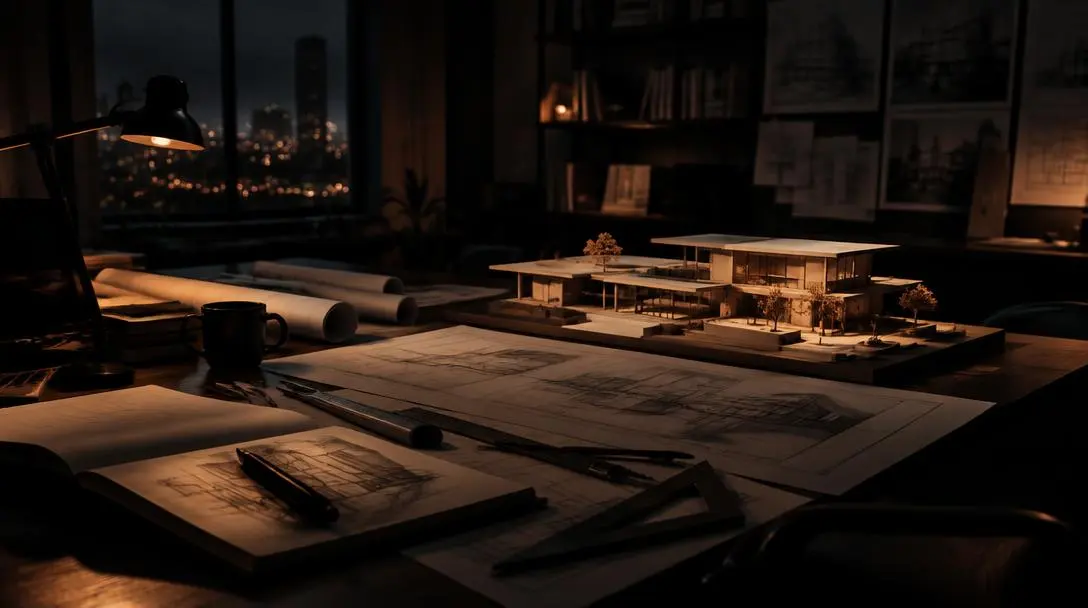
Every year, hundreds of students walk through the gates of art schools in Karachi and Lahore dreaming of building skylines, designing high-end residences, or launching boutique design studios. However, pursuing an architecture career Pakistan requires far more than an eye for aesthetics or a casual interest in sketching. It is one of the most gruelling, academically unique, and financially misunderstood career paths in the country.
Unlike standard four-year business or computing programmes, professional architecture in Pakistan is an intensive five-year commitment governed by strict statutory licensing. You will spend nights sleeping on studio floors, invest thousands of rupees in sheets of mount board and acrylic, and face harsh public critiques from working architects. If you are a student in Matric, Intermediate, or A Levels considering this path, you need clear facts about admissions, study load, costs, and earnings before you commit.
Choosing Your School: NCA, IVS Karachi, and Public Universities
Where you study architecture in Pakistan shapes your network, design philosophy, and initial job prospects. The landscape is split between historic specialised art and design institutions, prestigious private colleges, and public engineering universities.
The National College of Arts (NCA), with its historic campus on Mall Road in Lahore and its Rawalpindi campus, remains the oldest and most culturally storied art school in the country. NCA operates on a regional quota system, giving students from Sindh, Balochistan, Khyber Pakhtunkhwa, and Gilgit-Baltistan designated seats alongside the Punjab quota. Tuition at NCA is subsidised compared to private alternatives, but the competition for an NCA admission is fierce, often exceeding thousands of applicants for a handful of seats per province.
In Karachi, the Indus Valley School of Art and Architecture (IVS) in Clifton represents the gold standard for private architectural and design education. Established by practicing architects and artists, IVS Karachi is known for rigorous conceptual training, intense studio culture, and strong industry linkages across Sindh's corporate and construction sectors. The trade-off is the fee structure: private design education costs significantly more, with semester fees frequently crossing PKR 350,000 to PKR 500,000, excluding equipment and material costs. Merit-based and need-based financial aid exists, but you must apply early.
Beyond these two, you have strong engineering universities offering accredited five-year Bachelor of Architecture (B.Arch) degrees. In Karachi, NED University of Engineering and Technology houses its Department of Architecture and Planning in the historic City Campus near Maulana Din Mohammad Wafai Road, offering low tuition and a deep focus on urban planning and heritage. Dawood University of Engineering and Technology (DUET) also offers an established B.Arch. In Islamabad, NUST (SADA) has rapidly emerged as a tech-forward alternative with modern digital fabrication labs, while COMSATS (Islamabad and Lahore) runs respected, PCATP-accredited programmes.
Cracking the Entrance Test and the Design Portfolio Pakistan
Securing admission into an elite architecture or design programme differs completely from standard university admissions. A 95% in your Sindh Board HSC Pre-Engineering or straight A*s in Cambridge A Levels will not secure you a seat if you fail the creative evaluation.
Most top-tier schools split their evaluation into three components: a written aptitude test (evaluating basic mathematics, geometry, spatial reasoning, and English comprehension), a studio-based drawing test, and an in-person interview. For certain specialised design tracks—and increasingly at interview stages for architecture—submitting a compelling design portfolio Pakistan is essential.
Your portfolio should never be a collection of cartoon tracings, portraits copied from Instagram, or polished Pinterest recreations. Admissions faculties look for process, spatial observation, and creative problem-solving:
- Direct observational drawing: Sketches of real objects, streetscapes (such as Saddar or Burns Road), and structural details drawn from life rather than photos.
- Material experimentation: Cardboard, wire, clay, or scrap wood models that show you think in three dimensions.
- Understanding of light and shadow: Still-life studies that demonstrate tonal value and volume rather than flat outlines.
- Process work: Rough concept sketches and annotated development sheets that prove how you reached an idea, not just the finished artwork.
High school grades meet the minimum eligibility cut-off (typically 50% to 60% in Intermediate or an equivalent IBCC equivalence). The drawing test and interview score determine whether you actually get the seat.
If you are applying to NCA, prepare specifically for their timed still-life drawing test, where candidates are given common household objects (such as a kettle, shoes, or draped cloth) and evaluated on proportion, perspective, and mark-making under strict time limits.
The Studio Grind: Realities of an Architecture Career Pakistan
The academic culture of an architecture school is unlike any other degree in Pakistan. You do not study by memorising textbooks for end-of-term exams. Your degree revolves around the Design Studio, an open room where you spend 15 to 25 hours per week working at drafting tables, building study models, and discussing projects with instructors.
Each semester culminates in a 'Jury'. You pin your drawings to the wall, place your scaled models on a table, and defend your design decisions before a panel of visiting architects, academics, and your peers. External juries can be ruthless. Panelists will interrogate your structural logic, your spatial flow, your staircase dimensions, and your aesthetic choices. Learning to accept harsh critique without taking it personally is the first major psychological hurdle of the degree.
The financial and physical toll is real:
- 1Hidden costs: Model-making supplies—grey board, balsa wood, acrylic sheets, foam board, spray glue, cutting mats, and laser cutting services—routinely cost students between PKR 15,000 and PKR 45,000 per semester on top of tuition.
- 2Software hardware demands: By year two, you will need a laptop or desktop with a dedicated graphics card capable of rendering complex 3D models in AutoCAD, Rhino, SketchUp, Revit, Lumion, and V-Ray. This requires a machine costing between PKR 180,000 and PKR 350,000.
- 3Sleep deprivation: 'All-nighters' before juries are a structural reality of the culture. While better time management helps, the iterative nature of design—where an instructor asks you to rework your entire floor plan three days before final submission—makes regular sleep patterns rare near project deadlines.
Explore our guides on academic resources to help budget for hardware and study supplies before stepping into studio life.
Licensing and PCATP: How to Legally Practise in Pakistan
You cannot legally call yourself an architect or sign off on building plans in Pakistan simply by completing a degree. The profession is regulated by the Pakistan Council of Architects and Town Planners (PCATP), established under federal law through the PCATP Ordinance of 1983.
To practise legally, you must satisfy three conditions:
- Your degree must be a five-year Bachelor of Architecture (B.Arch) from an institution formally recognised and accredited by PCATP at the time of your graduation.
- You must register with PCATP upon graduation to receive your professional registration number.
- To submit building plans for municipal approval (such as the Sindh Building Control Authority - SBCA in Karachi, or the Lahore Development Authority - LDA), you must fulfill the local development authority's licensing requirements, which usually require a minimum period of documented practice under a registered senior architect.
Four-year degrees in architectural technology, interior design, or environmental design do not qualify you for PCATP registration as an architect. If your goal is to design buildings and run an architectural practice, verify your target university's PCATP accreditation status directly on the council's official website before paying your admission fee.
Comparing Architecture and Design Pathways in Pakistan
Students frequently conflate architecture with interior design, communication design, or industrial design. While they share foundation years at schools like IVS and NCA, the careers, regulatory demands, and entry salaries diverge significantly.
| Programme | Degree Duration | PCATP Licensing? | Common First-Job Salary (Karachi/Lahore) | Dominant Employers |
|---|---|---|---|---|
| Architecture (B.Arch) | 5 Years | Mandatory | PKR 35,000 – PKR 55,000 | Architectural firms, developers, construction companies |
| Interior Design | 4 Years | No | PKR 40,000 – PKR 60,000 | Boutique studios, retail brands, commercial fit-out firms |
| Communication / Graphic Design | 4 Years | No | PKR 50,000 – PKR 80,000 | Ad agencies, software houses, tech startups, fintechs |
| Industrial / Product Design | 4 Years | No | PKR 40,000 – PKR 65,000 | Manufacturing firms, furniture brands, packaging companies |
Notice the paradox: architecture requires the longest study period (five years) and statutory licensing, but its entry-level salaries are often lower than those in digital communication design or UI/UX design. You must enter this field with your eyes wide open regarding the initial return on investment.
Salary Benchmarks: What an Architecture Career Pakistan Pays
The commercial reality of architecture in Pakistan is characterised by a slow, steep income curve. Unlike the software industry, where a junior developer might secure PKR 100,000 immediately out of college, entry-level architectural apprenticeships carry low stipends.
During your mandatory post-graduate internship or first junior role at a local firm, expect starting monthly salaries between PKR 35,000 and PKR 55,000 in major cities like Karachi, Lahore, and Islamabad. Smaller firms outside tier-one cities sometimes offer as little as PKR 25,000 to PKR 30,000 for fresh graduates.
Here is how compensation typically evolves across the profession:
- Junior Architect (0–2 years): PKR 35,000 – PKR 60,000. You will mostly handle drafting, 3D modelling, site measurements, and municipal drawings under senior supervision.
- Project Architect (3–6 years): PKR 80,000 – PKR 140,000. You manage client meetings, coordinate structural and MEP (mechanical, electrical, plumbing) consultants, and oversee on-site construction.
- Senior Associate / Studio Lead (7–10+ years): PKR 180,000 – PKR 350,000+. You run firm operations, secure commercial projects, and guide the studio's overall design output.
- Independent Practice Owner: Variable. Independent architects charge either a percentage of construction costs (typically 3% to 8% for residential, 2% to 5% for large commercial) or a fixed per-square-foot fee. A solo practitioner with two to three active residential construction projects in localities like DHA or Bahria Town can earn significantly higher incomes, but this requires substantial personal networks, business acumen, and cash flow management.
Those who develop expertise in Building Information Modelling (BIM) software, such as Autodesk Revit, or specialise in computational design and project management, can access lucrative remote drafting roles for overseas firms in the Gulf, the UK, or North America, earning in foreign currency while based in Pakistan.
For advice on structuring your career trajectory, review the options featured in our careers directory.
Making Your Decision: From Intermediate to Architecture School
If you are currently in Class 11, Class 12, or your A Level years, your preparation should begin immediately. Do not wait for your final board results to think about the studio test.
Start building core observational habits today:
- Maintain a regular sketchbook: Spend thirty minutes every day drawing buildings, intersections, staircases, and interior rooms from life. Focus on two-point and three-point perspective.
- Protect your subject choices: For an accredited B.Arch, PCATP requires a mathematics background. You must complete Intermediate Pre-Engineering, General Science with Mathematics, or A Levels with Mathematics. If you are an Arts or Humanities student without Mathematics, you will be ineligible for B.Arch programmes, though you can still apply for Interior Design, Textile Design, or Fine Art.
- Visit the thesis shows: Every December and January, IVS Karachi, NCA Lahore, and NED host public graduation exhibitions. Attend them. Speak directly to graduating fifth-year students standing next to their models. Ask them about their debt, their working hours, and their portfolios.
Architecture is not a fallback option for students who missed medical or engineering merit lists. It demands extreme dedication, a high tolerance for iterative criticism, and financial patience during your early career. If you possess genuine spatial curiosity and an appetite for building tangible structures, it remains one of the most intellectually rewarding professions in the country. Evaluate your readiness with our aptitude quiz before sending in your applications.
Questions students ask about this topic
Keep reading
- Career GuidanceChoosing Your Group After Matric in Karachi Without RegretGroup choice is not a life sentence, but it does set your next four years. Here is a calm, evidence-first framework for deciding between Pre-Medical, Pre-Engineering, I.Com, Computer Science and Humanities.
- Career GuidanceFive Skills School Does Not Teach But Employers ExpectMarks open the first door. These five habits decide what happens after you walk through it — and every one of them can be built while you are still in school.
- Career GuidanceCommerce Is Not the Backup Plan: Careers After I.Com in PakistanKarachi runs on finance, trade and audit — and I.Com is the direct entry into all three. A realistic map of qualifications, timelines and what each route demands.