Computer Science vs Software Engineering: Which Degree in Pakistan?
A realistic guide for Pakistani students comparing Computer Science and Software Engineering, covering PEC rules, local job markets, and curriculum differences.
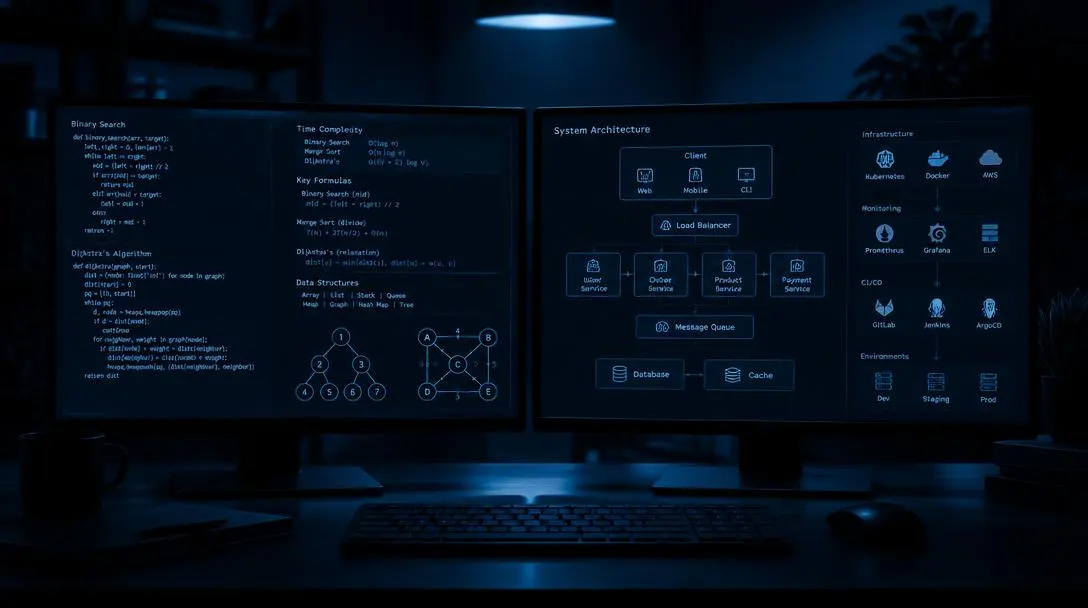
Every year after the Board of Intermediate Education Karachi (BIEK) and Federal Board announce their Part-II results, thousands of students face the exact same dilemma. You want to enter the tech sector, your relatives keep telling you to become an 'engineer', and university admission portals present you with two primary options: BS Computer Science and BS Software Engineering. When comparing computer science vs software engineering, many applicants assume one is simply an updated version of the other, or that an engineering badge guarantees higher pay. Neither assumption is accurate.
The truth is that while both degrees sit under the broader computing umbrella, they train your brain differently. Choosing the wrong one will not end your career, but it can leave you sitting through four years of courses that frustrate your natural learning style. Let us unpack the structural, academic, and professional realities of pursuing a CS degree in Pakistan versus an SE degree, without the marketing gloss of private university prospectuses.
The Fundamental Divide: Theory vs Construction
To understand the difference, look at how both fields originated. Computer Science (CS) is fundamentally a branch of mathematics. It explores computation itself: how data structures operate, how algorithms solve problems in finite steps, and how machines process languages through compilers. A CS student spends considerable time asking, 'Is this computationally possible, and how efficient is it mathematically?'
Software Engineering (SE), by contrast, borrowed its discipline from civil and industrial engineering. It assumes the algorithms already exist and asks, 'How do we build a maintainable, bug-free, large-scale application on time and within budget?' SE prioritises requirements gathering, system architecture, testing suites, quality assurance (QA), and continuous integration workflows.
If you enjoy mathematical proofs, experimenting with machine learning models, cryptography, and writing code from absolute scratch, Computer Science will feel rewarding. If you prefer building functional web applications, planning team workflows, designing user interfaces, and ensuring that five hundred thousand users can log into an app without the server crashing, Software Engineering aligns closely with your goals.
Curriculum Comparison: Computer Science vs Software Engineering
Under the revised curriculum guidelines issued by the Higher Education Commission (HEC) of Pakistan, both degrees share roughly 50 to 60 percent of their foundational coursework. In your first two years at any accredited university, you will study Programming Fundamentals, Object-Oriented Programming (OOP), Data Structures and Algorithms (DSA), Database Systems, and Discrete Mathematics regardless of which programme you join.
The divergence happens sharply in the fifth semester. CS students pivot deeper into computing theory, while SE students dive into development processes and architectural blueprints.
| Feature / Course Area | BS Computer Science (BS CS) | BS Software Engineering (BS SE) |
|---|---|---|
| Primary Accreditation | NCEAC (HEC) | PEC (if under Engineering faculty) or NCEAC |
| Core Mathematical Focus | Multivariable Calculus, Discrete Math, Graph Theory | Applied Statistics, Discrete Structures, Linear Algebra |
| Specialised Theory Courses | Automata Theory, Compiler Construction, Operating Systems Theory | Software Construction, Software Quality Assurance, Formal Methods |
| Process & Management | Minimal (often limited to one introductory SE course) | Requirements Engineering, Software Project Management, Architecture |
| Hardware Interaction | Computer Architecture, Microprocessor Systems | Basic Digital Logic (often reduced focus) |
| Capstone (Final Year Project) | Research-driven prototypes, ML/AI engines, novel algorithms | Production-ready applications, SaaS platforms, enterprise systems |
Notice the trade-off. If you enrol in an SE programme, you will likely skip Compiler Construction or Advanced Theory of Automata to make room for Software Testing and Verification or Project Management. Neither path is inferior, but a CS background makes transitioning into theoretical niches like AI research or systems programming smoother, whereas SE prepares you directly for agile corporate development teams.
PEC Accreditation: Does the 'Engineer' Title Matter in Pakistan?
This is the single biggest point of confusion for students in Karachi and across Sindh. Pakistani society places enormous cultural prestige on the title 'Engineer' (Engr.). Because of this, parents often push their children towards Software Engineering, believing that the Pakistan Engineering Council (PEC) registration provides guaranteed prestige and state-backed job security.
Here is the ground reality: PEC accreditation only applies if the university offers BS Software Engineering under an accredited Engineering Faculty. For example, NED University of Engineering and Technology (NEDUET) offers PEC-accredited engineering degrees. However, many premier tech institutions—including FAST-NUCES, IBA Karachi, and the University of Karachi (UBIT)—offer computing programmes under their Computer Science departments, accredited by the National Computing Education Accreditation Council (NCEAC), not PEC.
A green PEC card carries substantial value if you are a civil, mechanical, or electrical engineer applying for government infrastructure positions or Public Service Commission (SPSC/FPSC) quotas. For software professionals, a PEC card is almost entirely irrelevant in the private tech ecosystem.
No commercial software house in Shahrah-e-Faisal, Clifton, or Gulshan-e-Iqbal will request your PEC registration number during an interview. They will inspect your GitHub repository, test your problem-solving skills on a whiteboard, and evaluate your understanding of system design. Do not pick SE solely because you want 'Engr.' on your wedding invitation card; pick it only if the actual coursework appeals to you.
Eligibility and Admission Realities in Karachi
The entry criteria for tech degrees in Sindh have shifted in recent years. Historically, only students with Pre-Engineering or ICS (Physics, Mathematics, Computer Science / Statistics) intermediate backgrounds could apply. Following updated HEC policies, students with Pre-Medical backgrounds can now also apply for computing degrees, provided they clear deficiency mathematics courses during their first two semesters.
If you are navigating your intermediate studies or A Levels, check out our quiz to evaluate your current aptitude, or browse relevant courses for entry test preparation. Admission criteria generally follow these patterns:
- Public Sector Universities (NEDUET, UBIT / University of Karachi): Admissions depend heavily on your intermediate percentage (BIEK or equivalent) combined with an entrance test. Closing merit for CS at NED and UBIT has climbed aggressively over the past three years. Pre-Engineering and ICS students face intense competition.
- Premier Tech Institutions (FAST-NUCES, IBA): These universities rely almost entirely on their own rigorous entrance exams testing advanced mathematics, analytical reasoning, and basic English. A Level students with strong Mathematics mechanics foundations often perform well here, but intermediate students with thorough textbook preparation can clear them with targeted practice.
- Private Universities (SSUET, Bahria, Dawood, Ziauddin, Habib): Fees and eligibility vary widely. Habib University requires holistic profile assessments and SAT-style entrance tests, while Sir Syed University (SSUET) and Bahria University operate on their respective entrance exam schedules.
Keep in mind that admission criteria and cut-off scores shift annually based on cohort volumes. Never rely on the previous year's closing score as a guarantee; always consult the university's official admissions portal during July and August.
Employer Perception and IT Jobs in Karachi
How do local tech recruiters view both credentials? If you visit tech clusters around Karachi—such as the IT corridors along Shahrah-e-Faisal, Korangi Industrial Area tech hubs, or office complexes near II Chundrigar Road—you will discover that hiring leads treat BS CS and BS SE as virtually interchangeable for junior developer roles.
Companies like Systems Limited, 10Pearls, Folio3, Contour Software, and regional tech setups hire graduates for titles such as Associate Software Engineer, Frontend Developer, Backend Developer, or QA Automation Engineer. When evaluating fresh candidates, their assessment pipelines look at technical execution:
- 1Core Problem Solving: Can you write clean code to invert a binary tree or find cycles in a linked list? (CS edge)
- 2Framework Competence: Do you understand how an API interacts with a database, and can you write integration tests using modern frameworks? (SE edge)
- 3Communication and Git Literacy: Can you branch, merge, and explain pull requests in an agile sprint environment? (SE edge)
Where differences do surface is in specialised tracks. If a company in Karachi is building a proprietary computer vision tool for logistics or training an Arabic-Urdu large language model, they actively search for graduates holding a CS degree in Pakistan with a track record in calculus and probability. Conversely, if a fintech startup needs someone to build dependable microservices that strictly comply with State Bank data regulations, candidates with strong Software Engineering scope in testing and documentation stand out.
Starting salaries for fresh graduates in Karachi span a wide spectrum. As of 2024–2026, graduates from top-tier institutions entering Tier-1 software houses can expect entry-level packages between PKR 80,000 and PKR 150,000 per month. Graduates from mid-tier public and private institutions typically start between PKR 45,000 and PKR 75,000 per month, often moving up past PKR 150,000 within two years once real-world execution is proven.
Freelancing and Remote Work: Does the Degree Matter?
A massive percentage of Pakistani students enter computing with the explicit goal of freelancing on Upwork and Fiverr, or securing direct remote contracts paying in foreign currency. If this is your primary ambition, does the distinction between computer science vs software engineering matter at all?
Direct foreign clients and international remote teams do not know the difference between Pakistani university syllabi, nor do they care. A client hiring for a Next.js web application or a Flutter mobile product checks your live deployment links, client reviews, and code cleanliness. They will not ask if your degree was accredited by NCEAC or PEC.
However, the nature of the work reveals differences:
- The Freelance Advantage of SE: SE students spend coursework hours building practical full-stack projects, learning Docker, testing pipelines, and user story mapping. This makes picking up commercial client work during third year significantly easier.
- The Long-Term Advantage of CS: Freelance developers who hit a career ceiling usually do so because they do not understand memory management, network protocols, or algorithm optimisation. When complex bugs occur in high-traffic applications, foundational CS principles give you the diagnostic tools to solve them.
If your goal is to support your family early via freelance earnings, ensure you build commercial web and mobile development skills independently on platforms like GitHub, regardless of which degree badge you wear. You can explore structured student resources in our resources section.
Fee Structures and Practical Return on Investment
Higher education in Pakistan has seen steep fee inflation. Your choice of degree must account for household budgets and projected returns. Public sector options like UBIT (KU) charge modest semester fees (typically ranging between PKR 35,000 and PKR 70,000 per semester), whereas top private and semi-government institutions charge between PKR 180,000 and upwards of PKR 450,000 per semester.
Because starting salaries in the local market depend on demonstrated technical competence rather than institutional fees alone, spending millions of rupees on a degree does not automatically produce a proportionate salary. If finances are tight, attending an affordable public programme while aggressively building projects, contributing to open-source software, and maintaining high grades for merit-based support (such as HEC need-based scholarships) is far wiser than going into debt for a private degree name.
Decision Framework: Making Your Final Choice
To cut through the noise, sit down with your intermediate textbook scores, your personal computing habits, and evaluate where your interest naturally leans.
Choose Computer Science if:
- You have a genuine affinity for mathematics, logic, and analytical problem-solving.
- You intend to pursue higher studies (MS/PhD) abroad in specialized subfields like Machine Learning, Cryptography, Data Science, or Robotics.
- You want maximum academic flexibility across all computing sub-disciplines.
- You are comfortable studying theoretical subjects that do not immediately produce a visual software application.
Choose Software Engineering if:
- You prefer pragmatic system building, product architecture, and application design over abstract mathematical proofs.
- You want to understand the team-based, managerial, and operational life cycle of software development.
- You are aiming directly for conventional corporate development, QA automation, or project management roles in software companies straight out of university.
- You prefer structured group coursework that mirrors real-world corporate IT environments.
Both routes can lead to the exact same top-tier engineering desks in Karachi and international remote roles. The deciding factor will never be the abbreviation printed on your final transcript; it will be the depth of your personal portfolio, your technical competence, and your commitment to learning independently beyond your university's lecture halls.
Questions students ask about this topic
Keep reading
- Career GuidanceChoosing Your Group After Matric in Karachi Without RegretGroup choice is not a life sentence, but it does set your next four years. Here is a calm, evidence-first framework for deciding between Pre-Medical, Pre-Engineering, I.Com, Computer Science and Humanities.
- Career GuidanceFive Skills School Does Not Teach But Employers ExpectMarks open the first door. These five habits decide what happens after you walk through it — and every one of them can be built while you are still in school.
- Career GuidanceCommerce Is Not the Backup Plan: Careers After I.Com in PakistanKarachi runs on finance, trade and audit — and I.Com is the direct entry into all three. A realistic map of qualifications, timelines and what each route demands.