CSS Exam: What Class 12 Students Should Know Now
A realistic guide for Class 12 students in Pakistan on CSS eligibility, undergraduate degree choices, subject selection, and early reading habits.
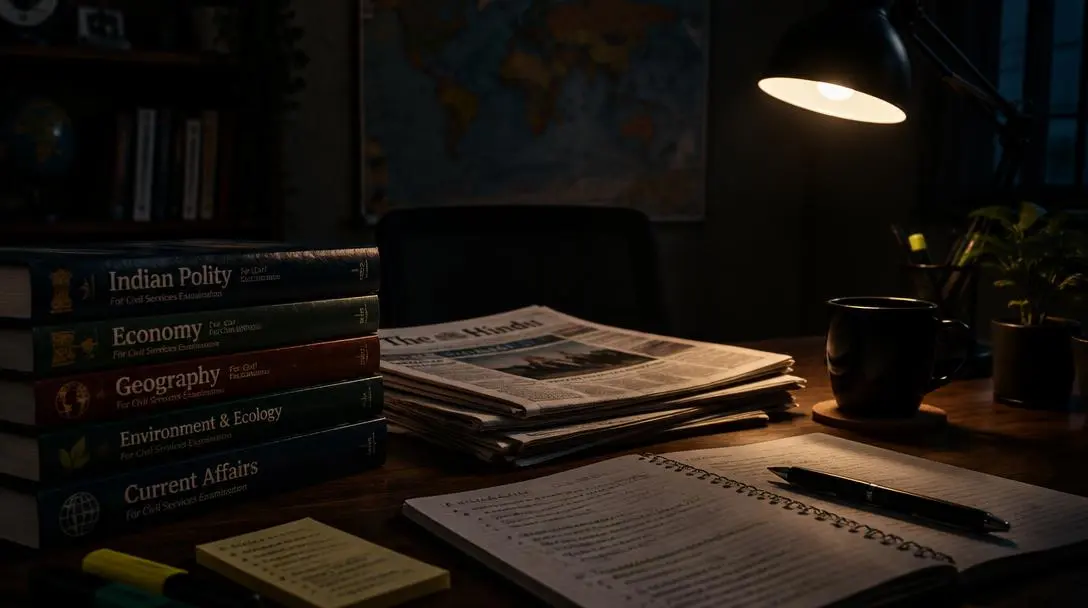
If you are finishing your intermediate exams at BIEK, sitting your Federal Board papers, or completing your A Levels in Karachi, you have probably heard relatives or teachers advise you to appear for the competitive exams. For many ambitious students, joining the civil services Pakistan represents job security, administrative power, and prestige. However, diving into serious CSS exam preparation during your college years without understanding how the system actually operates is a recipe for burnout.
The Central Superior Services (CSS) examination, conducted once every year by the Federal Public Service Commission (FPSC), is a marathon test of written expression, analytical thinking, and mental stamina. Right now, in Class 12, your goal should not be to memorise Pakistani affairs facts or cram international relations theory. Your task is to understand the rules of the game, pick the right university degree, and train your mind to read and write with precision.
CSS Eligibility Rules You Must Know at 17 or 18
Before you map out your future career, you must understand official CSS eligibility criteria set by the FPSC. You cannot simply sit the exam straight out of college.
- Minimum Education: You need at least a bachelor's degree (minimum 14 years of formal education, though a 16-year four-year BS or honours degree is standard today) with at least a second division or Grade C from a recognised university.
- Age Limits: You must be at least 21 years old and not older than 30 years on the cut-off date (normally 31 December of the year preceding the examination). Certain government employees and candidates from specific recognised backward areas receive a two-year relaxation, but you should plan around the standard 21 to 30 window.
- Attempts: You have a lifetime maximum of three attempts for the CSS exam. Wasting an attempt when you are half-prepared can end your civil service ambitions permanently.
- Nationality: You must be a citizen of Pakistan or a permanent resident of the State of Jammu and Kashmir.
Keep in mind: clearing intermediate with 90 percent in Pre-Medical or straight A*s in your Cambridge exams does not automatically qualify you for any concession or quota. The CSS playing field resets for everyone at age 21.
Reality Check: Pass Rates, Quotas, and the Civil Service Ladder
Social media academies often portray the CSS exam as an easy gateway to administrative prestige, showing pictures of protocol cars and district commissioner postings. The statistical reality in Pakistan is much soberer.
Every year, between 20,000 and 40,000 candidates apply for the CSS exam. Around 12,000 to 18,000 actually appear in the written papers. Typically, fewer than 400 candidates pass the written examination—a pass rate that routinely hovers between 1.5% and 3.5%. Following medical checks, psychological assessments, and viva voce interviews, only 200 to 250 candidates are allocated to the 12 occupational groups, including the Pakistan Administrative Service (PAS), Police Service of Pakistan (PSP), and Foreign Service of Pakistan (FSP).
Furthermore, postings are governed by the federal quota system (allocated between Merit, Punjab, Sindh Rural, Sindh Urban, Khyber Pakhtunkhwa, Balochistan, and other regions). If you hold an urban domicile in Karachi, Hyderabad, or Sukkur, you are competing against top candidates for a very limited slice of Sindh Urban allocations. Understanding this early prevents false expectations and reminds you why maintaining an alternative career path through a solid degree is non-negotiable.
Choosing an Undergraduate Degree for CSS Exam Preparation
One of the most frequent dilemmas intermediate students bring to our academic career counsellors is whether to pursue a degree specifically tailored to the CSS syllabus. Many students abandon their natural aptitude for computing, accounting, or natural sciences to take general humanities degrees simply because they believe it guarantees higher exam marks.
This is usually a mistake. The FPSC changes examiners and scoring trends frequently. A subject that scores exceptionally well in one exam cycle might yield low marks the next year. If you base your four-year undergraduate investment solely on passing one competitive exam, and you do not make the final merit list, you may find yourself with a qualification that offers poor private-sector employment prospects in Pakistan.
Your undergraduate degree should primarily serve your backup career, not merely act as an engine for CSS exam preparation. Strong civil service officers come from diverse academic backgrounds: engineers from NED, doctors from Dow University of Health Sciences, finance graduates from IBA Karachi, and software engineers from FAST. Technical graduates often perform well because their academic training teaches discipline, structured problem solving, and analytical clarity.
| Undergraduate Field | Pros for Civil Services | Downsides / Trade-Offs | Backup Market Value in Pakistan |
|---|---|---|---|
| Social Sciences / Law (IR, Pol Sci, LLB) | Strong overlap with compulsory and optional syllabi; trains legal and essay writing. | High degree saturation; non-legal humanities degrees offer fewer high-paying private-sector roles. | Moderate (LLB offers independent practice; pure humanities require teaching or NGO work). |
| Business & Finance (BBA, BS Accounting) | Direct overlap with Accountancy, Public Administration, and Mercantile Law; sharp presentation skills. | High tuition costs at top institutions like IBA or LUMS; heavy commercial workload. | Very High (banking, corporate sector, FMCGs, auditing firms). |
| Engineering & CS (Software, Mechanical) | Develops structured logic, problem-solving, and numeracy; high capability in technical optionals. | Very heavy university curriculum; leaves little free time to read broad geopolitical history during semesters. | High to Very High (tech firms, software export, engineering consultancies). |
| Pre-Medical / Sciences (MBBS, BS Biosciences) | High discipline, proven capacity for deep research and heavy memorisation. | Five to six demanding years; rigid hospital rotations leave minimal energy for separate civil service reading. | Moderate to High (clinical practice, pharma, research). |
If your ultimate goal is the civil service, pick a four-year programme at an accredited university where you can comfortably maintain a high GPA while setting aside five to six hours each week to cultivate deep reading habits outside your syllabus. You can review relevant bachelor options in our degree courses section.
Demystifying CSS Optional Subjects Early
The CSS written examination carries a total of 1,200 marks, split evenly between 600 marks of compulsory subjects and 600 marks of optional subjects.
The six compulsory papers (100 marks each) are:
- 1English Essay
- 2English (Precis and Composition)
- 3General Science and Ability
- 4Current Affairs
- 5Pakistan Affairs
- 6Islamic Studies (or Comparative Study of Major Religions for non-Muslims)
For the remaining 600 marks, FPSC publishes groups from which you choose CSS optional subjects. These groups feature subjects like International Relations, Political Science, History of the USA, Criminology, Public Administration, Economics, and regional languages like Sindhi, Punjabi, or Pashto.
In Class 12, you do not need to lock down your CSS optional subjects today. Syllabus outlines are reviewed periodically by the FPSC, and subject popularity patterns shift. What you should do is observe your natural reading inclinations. If you enjoy studying constitutional history, legal structures, and institutional governance, you will likely do well in Political Science and Constitutional Law later. If you prefer data, industrial policy, and fiscal systems, subjects like Economics and Public Administration will suit your strengths.
Habits to Start in College for Long-Term CSS Exam Preparation
The primary reason bright university graduates fail the written CSS exam is not a lack of general knowledge. It is poor English expression, weak grammar, superficial reasoning, and an inability to construct a logical argument under timed conditions. English Essay and English Precis remain the two papers that cause the vast majority of candidates to fail every single year.
If you want an advantage over your peers, start building structural academic habits now instead of joining a commercial academy at age 22.
### 1. Read Broader Than Your Board Textbooks
Rote learning from Sindh Board or FBISE guidebooks will not prepare you for competitive analysis. Start reading reputable long-form journalism. Subscribe to or read the editorial and opinion pages of major Pakistani English-language dailies such as *Dawn* or *The News*. Read international commentary from outlets like *Foreign Policy*, *Project Syndicate*, or the *BBC*.
Do not read merely to store facts; read to understand structure. Note how senior columnists introduce a problem, use evidence, weigh counter-arguments, and present realistic policy solutions.
### 2. Master the Basics of English Grammar and Syntax
Examiners repeatedly complain in their evaluation reports about elementary grammatical blunders, broken sentence structures, and memorised idioms pasted haphazardly into essays. Work deliberately on your syntax. Learn how to write clear, coherent compound and complex sentences without becoming convoluted. If you can write 200 words of grammatically spotless, logically structured English every day, you will be ahead of 90 percent of the competition when you eventually sit for the exam.
### 3. Learn Pakistan's Real Political and Economic History
School Pakistan Studies courses frequently present sanitised, chronological timelines that end around the 1970s or skip critical institutional disputes. Begin reading balanced historical texts by established Pakistani and foreign scholars. Books by historians like Ayesha Jalal, Ian Talbot, or Anatol Lieven will give you context on why our federal structure functions the way it does.
### 4. Build Digital and Quantitative Literacy
The compulsory 'General Science and Ability' paper includes a 40-mark basic arithmetic, analytical reasoning, and mental ability component. Students who abandon all mathematics after Matric often drop easy marks here. Keep your mental arithmetic sharp, understand basic data visualisations, and learn how to interpret statistical graphs.
What You Should NOT Do in Class 12
Knowing what to avoid is just as valuable as knowing what to study. Here are three common traps that intermediate students in Karachi and across Pakistan fall into:
- Do not buy CSS preparation guides yet: Buying general knowledge mcq booklets or dated CSS guidebooks in Class 12 is a waste of money. Current affairs change daily, and static syllabus guides quickly become obsolete. Browse our curated learning resources for foundational skill-building instead.
- Do not pay exorbitant fees to CSS academies now: Some academies run expensive 'foundation' coaching for teenagers. These courses are almost entirely unnecessary at this stage. Focus your financial resources on getting into a top-tier undergraduate programme.
- Do not ignore your Intermediate / A Level grades: Your immediate priority is securing admission to a reputable university. A poor intermediate percentage closes university doors, eliminates potential merit-based academic scholarships, and damages your confidence.
A Pragmatic Timeline from College to the Exam Hall
To make your ambition manageable, break down the road ahead into four distinct life stages:
- 1Class 12 (Ages 17-18): Focus on exceptional college grades. Read the editorial pages daily, write one short summary a week, and eliminate grammatical errors from your writing.
- 2University Years 1 to 3 (Ages 19-21): Excel in your degree coursework. Take electives in history, international trade, sociology, or logic if available. Participate in debates, public speaking, or model UN conferences to develop verbal articulation.
- 3University Final Year (Ages 21-22): Finalise your degree. Track current affairs systematically. Download past papers from the FPSC website to inspect the question formats and understand how topics are framed.
- 4Post-Graduation Dedicated Window (6 to 12 months): Once your degree is complete, decide whether to begin dedicated CSS exam preparation. Review the optional subject groupings, obtain standard university-level textbooks, write mock answers under timed conditions, and have your work evaluated by credible mentors.
The civil service remains an important pillar of Pakistan's governance structure, but it requires patience, mental maturity, and exceptional written command. Treat your intermediate years as the time to build intellectual foundations, not as an excuse to start cramming for an exam that is still four to five years away.
Questions students ask about this topic
Keep reading
- Career GuidanceChoosing Your Group After Matric in Karachi Without RegretGroup choice is not a life sentence, but it does set your next four years. Here is a calm, evidence-first framework for deciding between Pre-Medical, Pre-Engineering, I.Com, Computer Science and Humanities.
- Career GuidanceFive Skills School Does Not Teach But Employers ExpectMarks open the first door. These five habits decide what happens after you walk through it — and every one of them can be built while you are still in school.
- Career GuidanceCommerce Is Not the Backup Plan: Careers After I.Com in PakistanKarachi runs on finance, trade and audit — and I.Com is the direct entry into all three. A realistic map of qualifications, timelines and what each route demands.